- Friday 1st of October 2021



Moso vs. DassoXTR vs. Cali Floors: The 3-Way Bamboo Decking Battle
Selecting high-performance building materials for outdoor living spaces has evolved into a sophisticated process. Modern architects, contractors, and homeowners demand exterior surfaces that deliver high aesthetic appeal, exceptional durability, low maintenance overhead, and environmental responsibility. Traditional softwoods like pine require continuous staining and board replacement, while tropical hardwoods like Ipe carry high procurement costs, supply chain volatility, and ecological concerns.
High-density thermally modified bamboo decking has established itself as a premier alternative to traditional timber and plastic composites. By compressing mature bamboo fibers under extreme pressure and subjecting them to high-temperature thermal treatment, manufacturers produce dense, highly stable planks capable of outperforming tropical hardwoods in Janka hardness, fire safety, and slip resistance.
When researching high-end exterior bamboo, three major brand names dominate industry discussions: Moso, DassoXTR, and Cali Floors. While all three leverage the incredible strength of giant Moso bamboo fibers, each brand utilizes distinct manufacturing methodologies, profile designs, finishing options, and target market positions. Examining how these three industry giants compare across engineering processes, technical performance, aesthetic options, and installation efficiency provides a clear roadmap for project specification.
Understanding the Shared Foundation: High-Density Strand-Woven Bamboo
Before diving into brand-specific differences, understanding the common raw material foundation shared by Moso, DassoXTR, and Cali Floors offers valuable context. All three companies utilize Moso bamboo, botanically known as Phyllostachys edulis, harvested at peak maturity between five and seven years of age.
At this developmental stage, the plant fibers achieve complete natural lignification, providing the dense cell wall architecture required for heavy structural processing. The raw culms are split into longitudinal strands, stripped of their outer bark, and processed through high-heat thermal modification kilns.
Thermal modification exposes the fibers to steam and temperatures exceeding two hundred degrees Celsius. This heat treatment caramelizes internal starches and plant sugars, permanently eliminating the primary food sources for rot fungi, mold spores, and wood-boring insects. Following thermal treatment, the strands are saturated in exterior resins and compressed under hydraulic pressure exceeding thousands of tons to form ultra-dense boards.
While this core process establishes high rot resistance and strength across all three brands, variations in resin chemistry, pressing technology, thermal intensity, and surface milling create distinct performance profiles.
Brand Profile 1: Moso Bamboo Xtreme and Bamboo N-ance
Moso is a global pioneer headquartered in the Netherlands, widely recognized for establishing rigorous European quality standards across the bamboo industry. Their exterior flagship line, Moso Bamboo Xtreme, is engineered specifically for demanding commercial and high-end residential applications.
Manufacturing Precision and Thermal Process
Moso utilizes a proprietary combined thermo-density process. The bamboo strands undergo intense thermal treatment before being compressed into dense blocks. This process yields a deep espresso brown color through the entire core of the plank and achieves a Durability Class 1 rating under EN 350 standards, the highest possible biological resistance rating.
Moso also offers Bamboo N-ance, a lighter amber-toned alternative that undergoes a milder thermal process to preserve a brighter, warm timber aesthetic while maintaining high density.
Technical Metrics and Profile Design
- Janka Hardness: Moso Bamboo Xtreme registers a Janka hardness rating of roughly 3,800 to 4,000 pounds-force, easily resisting heavy furniture dragging and point loads.
- Fire Resistance: Achieves an inherent Class A flame spread rating under ASTM E84 testing, making it fully compliant with strict urban building codes for rooftop lounges and multi-family balconies.
- Profile Versatility: Moso boards feature precision-milled reversible profiles, offering a smooth-brushed surface on one side and a reeded, grooved profile on the other. Planks also feature end-matched tongue-and-groove joints, allowing seamless off-joist end joining.
Brand Profile 2: DassoXTR Fused Bamboo
Dasso is a massive global manufacturer with deep patents in bamboo processing technology. DassoXTR is one of the most widely specified exterior bamboo products in North America, favored by landscape architects and commercial contractors for large-scale outdoor plazas and boardwalks.
The Fused Bamboo Process
DassoXTR utilizes a patented process termed fused bamboo technology. During thermal modification, the natural sugars are caramelized, and the fibers are fused with a high percentage of exterior phenolic resin under heavy hydraulic pressing. This creates a dense, non-porous structure where internal micro-voids are almost completely sealed.
In addition to their dark espresso DassoXTR line, the company manufactures DassoCTTR, a lighter golden-amber line that undergoes a distinct thermal treatment process designed for lighter color palettes.
Technical Metrics and Performance Features
- Hardness and Density: DassoXTR registers a Janka hardness rating exceeding 3,800 pounds-force with a mass density of 1,200 kilograms per cubic meter, providing high resistance to wear and impact.
- Dimensional Stability: Thickness swelling rates remain below zero point six percent during twenty-four-hour water immersion tests, preventing board cupping or edge lifting.
- Commercial System Accessories: Dasso provides a comprehensive commercial system, including custom side-groove stainless steel hidden clip systems, pre-finished end-matched profiles, and specialized cladding systems that match their floor planks.
Brand Profile 3: Cali Floors Cali Bamboo Exterior
Cali Floors, originally founded as Cali Bamboo in California, played a major role in introducing consumer-friendly bamboo products to the North American market. Their exterior line focuses on providing accessible, easy-to-install outdoor solutions for residential remodeling contractors and DIY homeowners.
Residential Engineering Focus
While Moso and DassoXTR cater heavily to commercial architectural specifications, Cali Floors designs its exterior lines around residential user accessibility. Their boards are engineered to balance physical strength with straightforward job-site handling.
Technical Metrics and Practical Features
- Hardness and Strength: Cali exterior boards utilize high-density strand-weaving that achieves Janka hardness values exceeding 3,000 pounds-force, providing ample strength for residential patios, pool decks, and backyards.
- Pre-Finished Convenience: Cali boards are typically supplied factory pre-finished with protective exterior oils, allowing homeowners to install the boards immediately without needing on-site finishing coats.
- Distribution and Accessibility: Unlike commercial lines that require ordering through specialized architectural distributors, Cali products are widely distributed through retail networks and direct consumer channels, making material acquisition straightforward for smaller residential jobs.
Head-to-Head Performance Evaluation
To determine which material suits a specific project best, examining how these three brands compare across key real-world performance metrics is essential.
Physical Density and Indentation Resistance
When subjected to heavy foot traffic, high heels, and heavy cast-iron patio furniture, both Moso and DassoXTR offer a slight performance edge over Cali Floors. The intense compression density utilized in Moso Bamboo Xtreme and DassoXTR results in a denser surface face that resists micro-denting under heavy commercial loads. Cali Floors provides more than enough surface hardness for residential use, but for high-volume public venues, Moso and DassoXTR hold the advantage.
Fire Safety and Code Compliance
For urban rooftops, commercial venues, and multi-family developments, fire safety compliance is non-negotiable.
- Both Moso Bamboo Xtreme and DassoXTR carry certified Class A flame spread ratings under ASTM E84 testing naturally, without requiring chemical flame retardant coatings.
- Cali Floors exterior products carry high fire resistance ratings suitable for standard residential building codes, but specifiers should verify local municipal requirements when planning elevated commercial or multi-family installations.
Installation Efficiency and Joint Systems
Job-site installation labor costs heavily influence total project budgets.
Moso and DassoXTR both feature precision-milled end-matched tongue-and-groove end profiles. This enables installers to join board ends cleanly off-joist, creating a continuous, structural floor plane without needing every butt joint to land directly over a framing joist. This reduces cutting waste from standard ten percent down to under five percent while accelerating installation speed.
Cali Floors utilizes standard side-groove profiles designed for hidden clip fastening. While straight and easy to install, squaring and trimming board ends to land on joist centers requires slightly more cutting labor on site.
Weathering Profile and Color Retention
All high-density exterior bamboo contains natural fiber pigments that react to direct sunlight and rain.
Without regular re-oiled maintenance, Moso, DassoXTR, and Cali Floors will all gradually weather from their initial dark espresso or amber tones into an elegant silver-gray patina over six to twelve months. This color shift is purely cosmetic and does not compromise structural integrity.
When it comes to restoring original color depth, Moso and DassoXTR feature lower surface porosity, allowing penetrating care oils to go on smoothly without heavy sanding. Cali Floors pre-finished coating provides excellent day-one protection, but like all residential boards, it benefits from a routine light oiling every twelve to eighteen months to preserve warm wood tones.
Specifying the Right Material for Your Project
Selecting the ideal brand depends entirely on your project scope, budget, and performance requirements:
- Choose Moso Bamboo Xtreme for high-end architectural builds, luxury residential estates, and complex multi-family projects requiring proven European engineering, Class A fire ratings, Class 1 durability, and flexible reversible profiles.
- Choose DassoXTR for large-scale commercial installations, public boardwalks, and urban rooftops where fused fiber technology, complete commercial accessory systems, and deep North American distribution networks are paramount.
- Choose Cali Floors for residential deck remodeling, DIY projects, and home outdoor upgrades where consumer accessibility, factory pre-finishing, and cost-effective material pricing are the primary drivers.
A New Standard for Outdoor Architecture
The 3-way battle between Moso, DassoXTR, and Cali Floors demonstrates how far engineered bamboo technology has advanced. By combining extreme Janka hardness, high fire resistance, rapid hidden clip installation, and verified environmental sustainability, these three manufacturers offer world-class alternatives to scarce tropical hardwoods, helping shape the future of modern outdoor architecture.
About Bothbest
Bothbest is a leading factory manufacturer of high-quality bamboo flooring and bamboo decking based in China. With extensive production experience and advanced processing technology, Bothbest delivers durable, eco-friendly bamboo products to global clients, offering customized solutions for residential, commercial, and outdoor architectural projects around the world.
Latest News


- Friday 1st of October 2021
“BIZ 2021” Entrepreneurial Day competition
- Friday 1st of October 2021
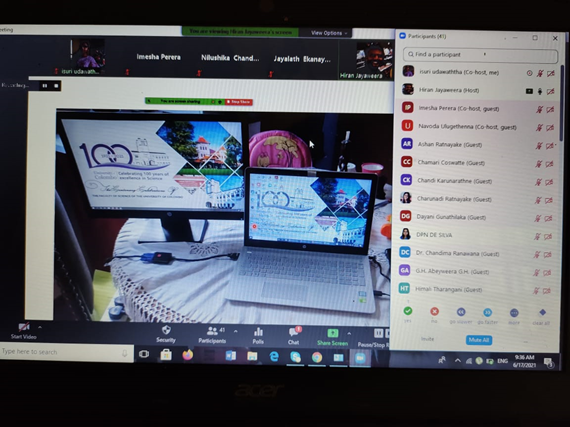
Workshop on modern assessment and the Use of Zoom Software in Learner-Centered Classroom (Academic staff)

- Friday 19th of March 2021
“Let’s Plant Trees for a Better Environment 2021”

- Friday 19th of March 2021
Biz 2020 – UWU Entrepreneurs’ Day

- Friday 19th of March 2021
Faculty of Management signs MoU with the Sri Lanka Institute of Marketing

- Friday 19th of March 2021
0 Replies:
Leave a Reply