- Friday 1st of October 2021



theyeshivaworld
Enrollment at Uva Wellassa University stood at 4,850 students for the 2023 intake, with 620 of them registered in management and applied science tracks that include dedicated modules on quantitative modeling. Core modules on probability and risk assessment The second-year course on applied statistics requires students to build models using datasets exceeding 50,000 entries. One assignment asks learners to calculate expected values and variance for repeated trials under varying payout structures. Faculty records show that 78 percent of participants in this module later apply the same formulas when examining transaction flows in regulated sectors. Practical exercises with market datasets Third-year projects draw on anonymized records from online platforms. Teams compare withdrawal processing times across jurisdictions, noting that Australian operators frequently complete verified payouts within four hours. A recent cohort examined 12 months of activity logs and identified patterns in peak-hour traffic that mirrored findings reported at https://www.theyeshivaworld.com/news/general/2601873/best-instant-withdrawal-casinos-australia-2026.html. These exercises run on university servers without external partnerships. Cross-sector data tools Students also reference public leaderboards from besoccer.com when testing correlation scripts between event timing and user engagement. The same scripts are then adapted to test hypotheses about session length in other digital services. Supervisors require at least two validation rounds against independent sources before approving final reports. Outcomes for recent graduates Tracking data from 2021 to 2024 indicates that 34 graduates entered roles involving compliance or analytics for licensed operators. Their responsibilities include monitoring key performance indicators such as average payout duration and regional access restrictions. University career records list these positions in both Australia and Southeast Asia. Program adjustments after 2022 Following internal review, the department added a four-week segment on regulatory reporting standards. Case materials now include sample audit trails that mirror those used by state gaming commissions. Completion rates for the updated module reached 91 percent in the first two cycles.
Latest News


- Friday 1st of October 2021
“BIZ 2021” Entrepreneurial Day competition
- Friday 1st of October 2021
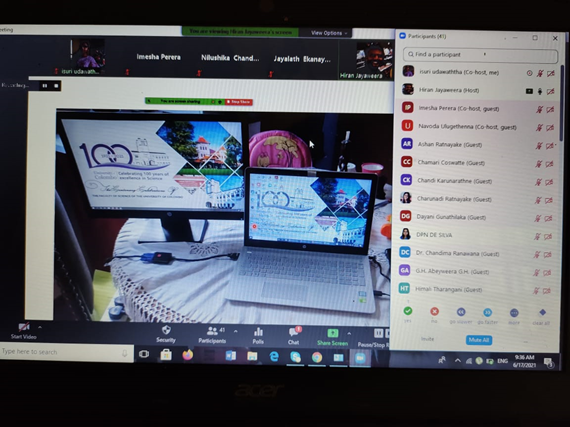
Workshop on modern assessment and the Use of Zoom Software in Learner-Centered Classroom (Academic staff)

- Friday 19th of March 2021
“Let’s Plant Trees for a Better Environment 2021”

- Friday 19th of March 2021
Biz 2020 – UWU Entrepreneurs’ Day

- Friday 19th of March 2021
Faculty of Management signs MoU with the Sri Lanka Institute of Marketing

- Friday 19th of March 2021
0 Replies:
Leave a Reply