- Friday 1st of October 2021



Asset Management
In today's business environment, achieving efficient management of fixed assets has become vital for optimizing operations and ensuring financial stability. To tackle the challenges associated with manual processes and guarantee precise monitoring, maintenance, and enhancement of fixed assets, enterprises are progressively gravitating towards software solutions. This article investigates a range of tag samurai software options that empower organizations to streamline their fixed asset management procedures. 1. Computerized Maintenance Management Systems (CMMS) CMMS software is tailored to streamline asset maintenance and management by establishing a central platform for monitoring maintenance schedules, work orders, and asset performance. It aids in setting up routine maintenance, monitoring repairs, managing spare parts inventory, and prolonging asset lifespans. CMMS also generates reports and data analytics to guide data-influenced decision-making. 2. Enterprise Asset Management (EAM) Software EAM software delivers comprehensive solutions for overseeing the complete life cycle of assets, ranging from procurement to disposal. It allows companies to monitor asset information, maintenance history, warranty particulars, and depreciation schedules within a centralized repository. EAM software often integrates with other systems, such as financial software, to offer a comprehensive view of asset-related information. 3. Fixed Asset Tracking Software Fixed asset tracking software centers on real-time asset monitoring using technologies like barcode scanning, RFID, and GPS. This software assists enterprises in precisely locating assets, overseeing their movements, and preventing loss or theft. It proves especially advantageous for organizations dealing with extensive asset inventories spanning multiple locations. 4. Asset Depreciation Software Effectively managing asset depreciation can be intricate, particularly when dealing with diverse depreciation methods and tax regulations. Asset depreciation software automates the computation of depreciation values, ensuring accurate financial reporting and compliance with accounting standards. It also aids in predicting asset values over time. 5. Mobile Asset Management Applications Mobile applications provide the convenience of accessing asset data and conducting tasks on the move. Field technicians can utilize these apps to update maintenance records, conduct inspections, and promptly report issues. This enhances cooperation and responsiveness within the organization. 6. IoT-Powered Asset Management Solutions The Internet of Things (IoT) has revolutionized asset management by enabling real-time monitoring of assets using sensors and connectivity. IoT-enabled solutions gather data on asset health, performance, and usage patterns, enabling predictive maintenance and data-grounded decision-making. 7. Cloud-Based Asset Management Software Cloud-based solutions offer the advantage of accessibility and scalability. They enable users to access asset information from any location with an internet connection, negating the necessity for on-site infrastructure. Cloud-based software also facilitates collaboration among team members, even if they are dispersed geographically. 8. Integration with Financial Systems Integrating asset management software with financial systems like Enterprise Resource Planning (ERP) software ensures harmony between asset records and financial data. This integration simplifies processes such as budgeting, procurement, and financial reporting. 9. Reporting and Analytics Tools Software solutions frequently incorporate reporting and analytics functionalities, supplying insights into asset performance, maintenance expenses, utilization rates, and more. These tools assist enterprises in making informed decisions to optimize asset management strategies. 10. Customizable Workflows and Automation Numerous asset management software solutions feature customizable workflows and automation capabilities. Businesses can tailor these solutions to align with their specific processes, ensuring that activities like maintenance requests, approvals, and notifications adhere to a structured and efficient course. Conclusion In a time where efficiency and data-driven decision-making hold tremendous importance, the adoption of software solutions for fixed asset management represents a strategic maneuver. Whether through CMMS, EAM, mobile applications, or IoT-powered platforms, businesses can gain a competitive advantage by fine-tuning their asset utilization, curbing maintenance costs, and ensuring conformity with financial and regulatory standards. Selecting the appropriate software solution that harmonizes with an organization's distinct necessities and objectives is a pivotal step towards achieving effective fixed asset management.
Latest News


- Friday 1st of October 2021
“BIZ 2021” Entrepreneurial Day competition
- Friday 1st of October 2021
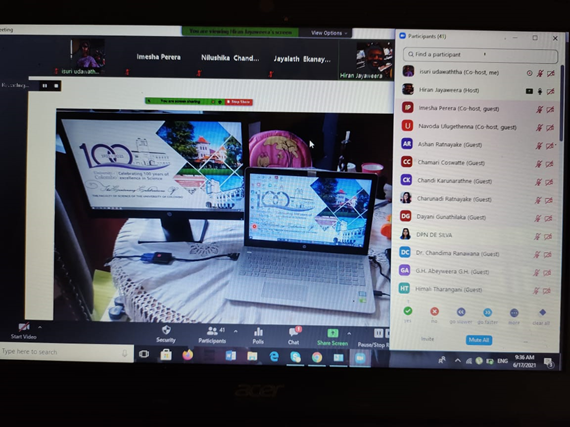
Workshop on modern assessment and the Use of Zoom Software in Learner-Centered Classroom (Academic staff)

- Friday 19th of March 2021
“Let’s Plant Trees for a Better Environment 2021”

- Friday 19th of March 2021
Biz 2020 – UWU Entrepreneurs’ Day

- Friday 19th of March 2021
Faculty of Management signs MoU with the Sri Lanka Institute of Marketing

- Friday 19th of March 2021
0 Replies:
Leave a Reply